
The base cloth decides how it behaves
Sequin fabric is two products in one: a base cloth and the decoration on top. Buyers tend to judge the sparkle and forget the base, yet the base decides the drape, the comfort and what the finished garment will weigh.
- Net or mesh: light and often sheer between the motifs, so it usually needs a lining. Soft net drapes, while stiffer net holds a flare in gowns and skirts.
- Georgette: a softer, more fluid fall. Heavy work can pull it out of shape, especially on the bias, so hang a length before you commit.
- Velvet: rich and warm, and usually opaque. It is often a stretch knit velvet, so check how much the sequins limit the stretch, and allow for the extra bulk at seams.
Sequins themselves are usually plastic film with a metallic or coloured coating, which is why heat and rubbing matter so much later on.
Flat, cupped and flip sequins
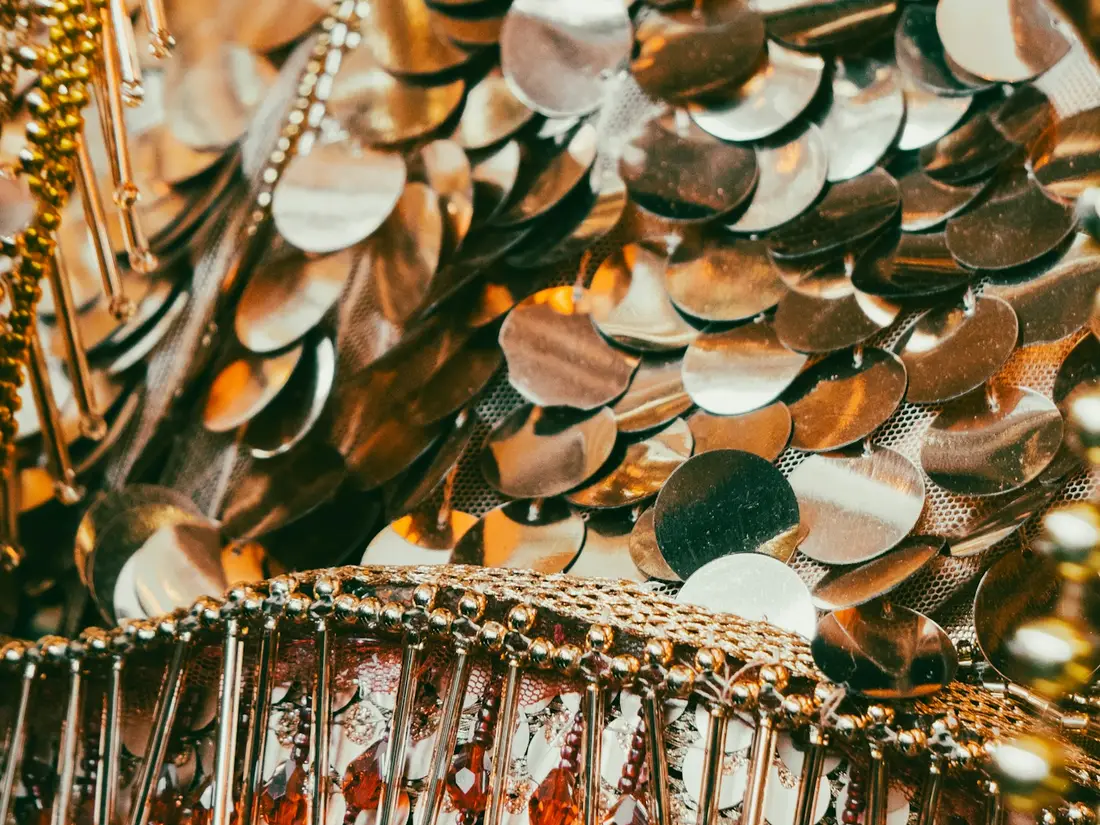
Flat sequins give a smooth, liquid shine and tend to feel the least rough. Cupped or faceted sequins scatter the light more, but their edges can catch. Size matters too: small sequins follow the drape of the base, while large ones add sparkle, stiffness and weight.
Flip sequins, also called reversible or mermaid sequins, are attached so they can lift and turn over when brushed, often showing a second colour underneath. They are popular for party tops and dresses, but they have a clear direction. Brushed one way they lie smooth, and brushed the other way they stand up and catch on hair, jewellery and bare arms.
Also check whether the work is all over or in motifs. Embroidered work often stops short of the selvedge, so the width you can actually use may be narrower than the width quoted.
Stitched versus glued
Stitched sequins are held by thread, usually laid by machine in long rows. They generally last better through wear and movement. The weak point is the thread: on some constructions one break lets a whole row run, so a loose end can cost more than a single sequin.
Glued or heat set sequins are quicker to apply and sit flat, with no thread on the back. They can look very neat when new, but flexing, heat and cleaning may loosen the adhesive over time.
To tell them apart, turn the fabric over. Stitched work shows lines of thread on the back and a thread path across the sequins on the front. Glued work has no stitching, and sometimes a faint shine of adhesive around the edges. Some fabrics combine both, so ask the seller directly.
Swatch tests for shedding and scratchiness
Ask for a swatch big enough to handle, then try these before ordering:
- Crush and rub: fold the swatch, crush it in your hand and rub it against itself over a sheet of white paper. Judge the centre of the swatch, because cut edges always lose a few.
- Pull a loose thread: tug gently at a cut edge and see whether a whole row starts to run.
- Scratch test: drag it across the inside of your forearm in both directions. That skin is closer to what a neckline or underarm will feel than your fingertips are.
- Coating test: rub with a damp white cloth to see whether colour or metallic finish comes off. Our colour fastness guide explains why this matters.
- Hang test: leave a length on a hanger overnight and look for sagging or dropped edges.
- Care test: put a spare piece through the cleaning you plan to recommend. Washing and dry cleaning solvents can dull or damage some sequins.
Lining, cutting and sewing
Lining: anywhere the wrong side touches skin needs a soft barrier, especially the neck, underarms and inner sleeves. Lining colour also changes the look of the sequins, so try a nude and a matching shade behind the swatch. For bridal and festive pieces, our note on lehenga fabrics covers the layers that sit under heavy work.
Cutting: cut in a single layer, from the wrong side, with all pieces running the same way and the sequins smoothing downwards. That one way layout uses more fabric, so include it when you estimate metres. Use an old pair of scissors or a dedicated blade, since sequins blunt good ones.
Sewing:
- Remove sequins from the seam allowances where you can, and secure the thread ends so rows do not run.
- Use a sharp needle, expect to change it often, and sew slowly with a slightly longer stitch.
- Press only from the wrong side, on low heat with a cloth, after testing a scrap. Sequins can curl or melt.
- Face or bind hems rather than folding sequins back on themselves.
- Keep the offcuts for repairs.
What to ask before buying
- What is the base fabric, and what is its composition?
- Which sequin type and size is it, and are they stitched or glued?
- Does the work run selvedge to selvedge, and what is the usable width?
- Is there a pattern repeat or a one way direction?
- Do all rolls match in shade, and can the design be repeated later?
- What care does the seller recommend, and has it been tried?
- Can you have a cut sample from the actual goods?
If you are looking for a particular quality, post a requirement stating the base, the sequin type, the colour and the quantity. If you hold sequin stock, list it with close photographs of both the front and the back, because the back answers the stitched or glued question at once. On fabric.market there is no commission, and nobody's name or number is shown until both sides agree.
Questions
Are stitched sequins better than glued sequins?
Stitched sequins generally last better through wear and movement, though a broken thread can let a whole row run. Glued sequins sit neatly but may loosen with flexing, heat or cleaning. A swatch test tells you more than the label does.
How can I stop sequin fabric from scratching?
Line anything that touches skin, particularly the neck, underarms and inner sleeves, using a soft lining. Bind raw edges with a soft fabric. Choosing flat or smaller sequins also helps, because they usually feel less rough than large or cupped ones.
Can sequin fabric be washed?
It depends on the sequins, the coating and how they are attached. Washing and dry cleaning solvents can both cause damage, so ask the seller and test a spare piece with the method you plan to use before recommending it.
Why do I need extra fabric for sequin garments?
Sequins have a direction, so all pieces must usually be cut the same way in a single layer. That layout uses more fabric than a folded, two way cut, and embroidered work may also leave less usable width.