

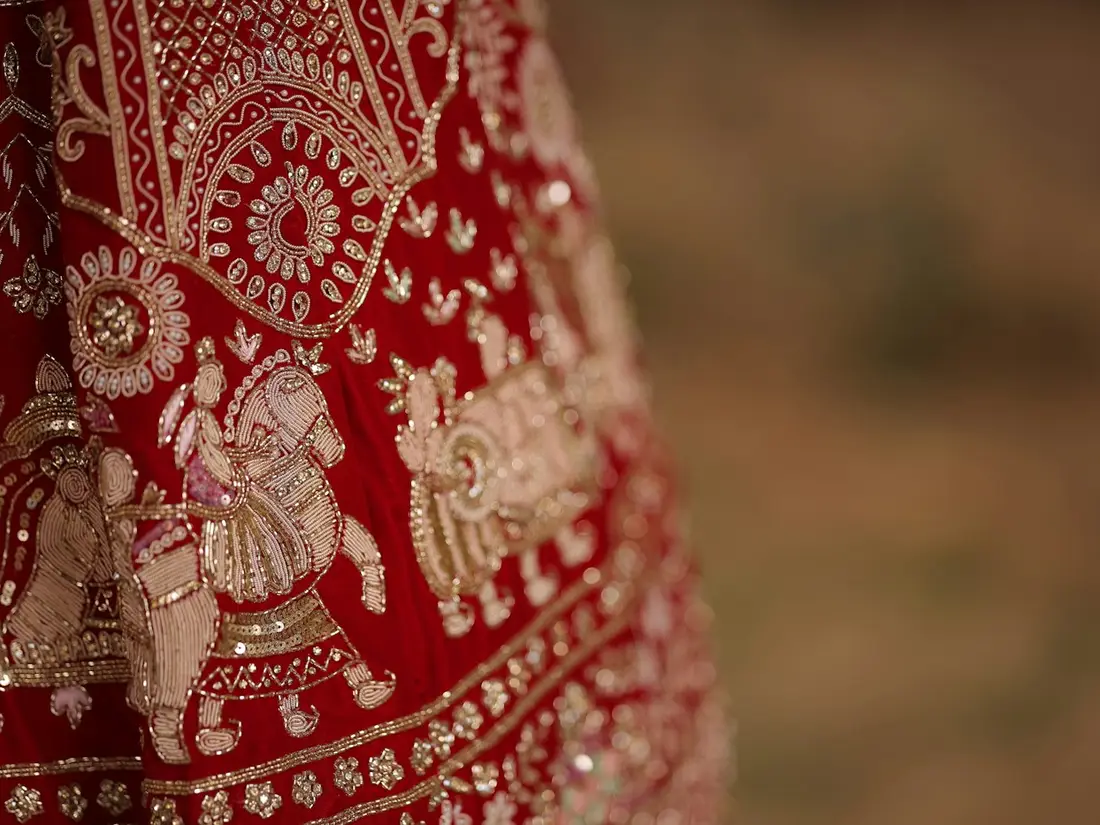
How each thread is made
Zari is an Indian and South Asian term for metal-look thread, woven or embroidered into cloth. It usually comes in three kinds:
- Real zari: fine silver wire, flattened into a thin strip, coated with a small amount of gold, and wound around a silk core. It is also called pure zari. It is heavy, soft in tone and costly, and it is mostly found in high-end handloom work and heirloom pieces.
- Tested zari: copper wire with a silver coating and a gold tone on top, wound around a core of silk, viscose or another yarn. It closely imitates the look of real zari at a lower cost, and it is common in good festive and Banarasi style work.
- Metallic thread: a thin polyester film given a metal coating, usually aluminium, and then coloured and slit into narrow strips. The strip is often wound on nylon, polyester or viscose. It is often called imitation or plastic zari. It is light, bright and inexpensive, and it comes in many colours beyond gold and silver.
Our post on gold zari dupattas for the festive season looks at where each one sits in a festive range.
How to tell them apart
No single check settles it, so combine a few.
- Daylight: real and tested zari usually have a softer, warmer glow. Metallic thread is often brighter and can look slightly plastic. Check near a window, since shop lights flatter everything.
- Weight and hand: a dense real or tested zari border has a noticeable weight and a slightly stiff, metal feel. A metallic border of the same size is lighter and more flexible.
- Bend a loose end: metal strip tends to hold a kink, while film usually springs back.
- Look at a worn or cut end: a reddish glint at a rubbed spot suggests copper, which points to tested zari. Unwinding a little strip also shows you the core.
- The burn test: with the seller's permission, burn a thread taken from a waste end. Film shrivels and melts into a small bead, while metal leaves wire or a metallic residue behind.
The limits are worth knowing. A bright new tested zari can resemble real zari, and a single piece can mix threads, for example one type in the border and another in the body. These checks can tell you metal from film fairly well, but they cannot prove purity by themselves. Metal content needs a proper test, so if you are paying for real zari, ask for what it contains in writing and whether there is any mark or certificate. The same habit helps with the base cloth, as explained in how to check a pure silk saree.
Why zari tarnishes
Metal reacts with air, moisture and sulphur compounds, which is why zari work can darken over time. Each kind behaves differently:
- Real zari tends to age slowly. The gold is a very thin layer over silver, so as it wears the silver can darken, and the colour often deepens into a muted tone.
- Tested zari tarnishes more readily, because the coatings are thin and the copper core reacts once exposed. It can turn dark, or show a coppery tone at worn spots.
- Metallic thread does not tarnish in the same way, since the coating is sealed in film. It can still lose colour, peel or crack with age, rubbing and heat.
Perfume, sweat, humidity and rubber can all speed up tarnishing on metal threads. Once it has set in, it is hard to reverse, so prevention matters most. Do not polish zari or rub it with cleaning products, as that can strip the coating and damage the fabric.
Care while wearing and cleaning
- Perfume and sprays: apply them before dressing, and keep them off the zari.
- After wearing: air the piece in the shade for a while, so that any sweat dries, before putting it away.
- Cleaning: dry clean with someone used to zari work, and tell them what type it is. Do not scrub spots, and avoid soaking a piece with metal thread unless you know it is safe.
- Ironing: press from the back, on low heat, with a cloth between. A hot iron can melt metallic film and flatten raised embroidery.
- Snags: keep jewellery and rough edges away. A pulled zari thread is hard to repair without it showing.
Storage that actually helps
- Clean and dry first: put nothing away damp or with fresh stains on it.
- Wrap it in soft cotton or muslin: plain, washed cloth is a good choice. Avoid long storage in plastic, which can trap moisture.
- Pad and refold: metal threads weaken and crack along a permanent crease, so change the folds every few months, or store heavy borders with soft padding in the fold.
- Lay heavy pieces flat: hanging a densely worked garment puts strain on the shoulders and seams.
- Keep mothballs away: do not let them touch the fabric, as chemicals may mark or discolour it.
- In humid seasons: take pieces out and air them from time to time, and keep them somewhere dry.
Shops can apply the same habits by wrapping zari stock individually, keeping it off damp walls, and selling older pieces first.
What to ask before you buy or sell
- Which zari, in plain words: real, tested or metallic, stated on the bill. If a seller says pure zari, ask what the thread is made of.
- Where it is used: border, pallu and body can all differ.
- The base fabric: ask for this separately, as a fine thread does not make a silk cloth, and vice versa. Silk, organza and synthetics all carry zari differently.
- Close photos in daylight, including the back of the work and any tarnished spots.
If you need a particular kind of zari work, post a fabric requirement with the zari type, base fabric and quantity, small or bulk. Nobody's name or number is shown until both sides agree, and you can ask each seller to confirm the details directly. Sellers can list their stock with the zari type stated honestly, which saves arguments later.
Questions
Does tested zari mean it has been tested?
No. In the trade, tested zari is simply the name of a thread with a copper core, a silver coating and a gold tone. It does not mean a laboratory has checked your particular fabric.
Is real zari made of gold?
Not solid gold. Real zari is usually fine silver wire with a thin gold coating, wound around a silk core. Ask what the thread contains, and whether there is any mark or certificate, if you are paying for it.
Does metallic zari turn black?
Usually not in the way real and tested zari can, because the metal coating is sealed in polyester film. Instead, it may lose colour, peel or crack with age, rubbing or heat, and a hot iron can melt it.
Can tarnished zari be cleaned?
It is hard to reverse fully. Do not rub it with polish or cleaning products, as that can strip the coating and damage the cloth. Take valuable pieces to a dry cleaner used to zari work, and accept that some darkening may stay.