

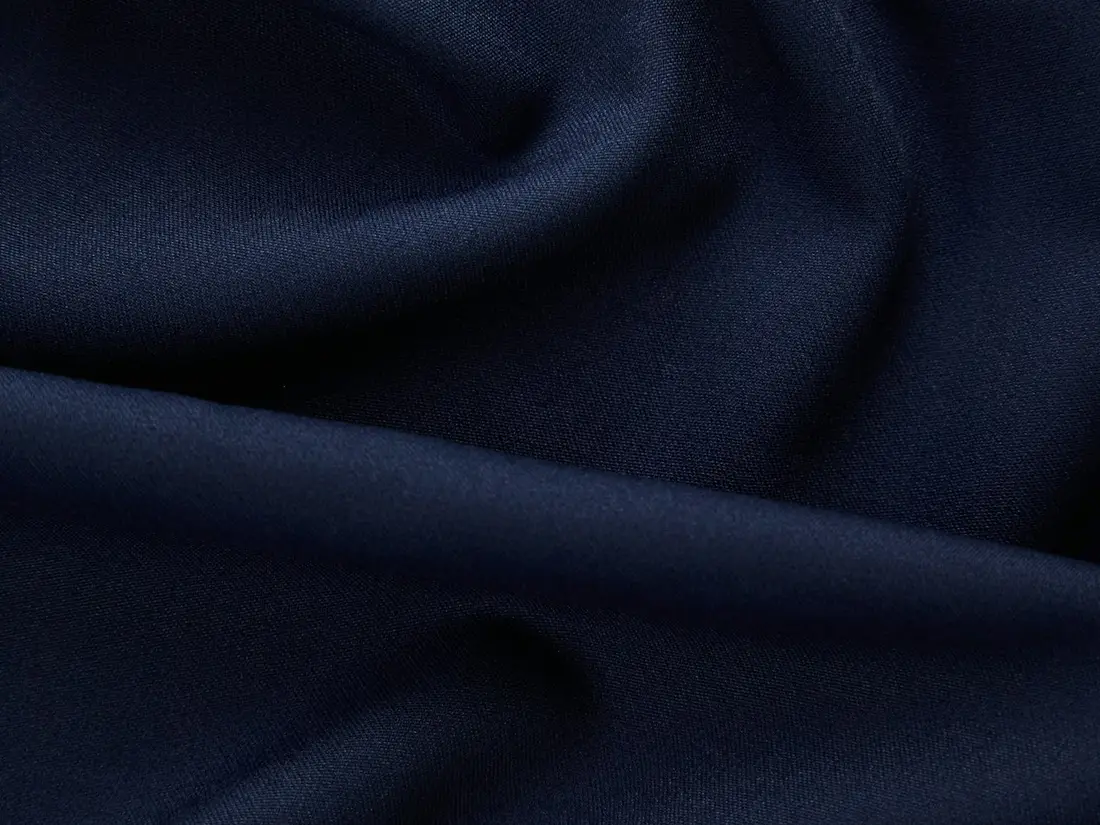
What crepe fabric means
Crepe is a finish and a construction, not a fibre. The word describes a fabric with a crinkled, pebbly or grainy surface, a dry feel and a soft, heavy fall. That surface usually comes from very highly twisted yarns. When the twist relaxes during finishing, the yarns try to curl, and the cloth pulls itself into a fine, uneven texture.
The same effect can also be made by a special weave that breaks up the surface, by embossing a pattern into the cloth with heat, or by a chemical finish that shrinks parts of the fabric. Twist crepes keep their texture for life. Embossed or pressed crepes can flatten out after washing and pressing, which is one reason two rolls both labelled crepe can wear so differently.
Because crepe is a construction, it exists in silk, polyester, viscose, wool, cotton and blends. Our crepe fabric page lists the qualities traders on the site are posting, and it is worth comparing them side by side before you decide.
The crepe names you will hear
- Poly crepe: polyester filament crepe. The most widely stocked quality and what most printed crepe kurtis, dresses and sarees use today.
- Pure crepe: a loose market term. Some traders use it for silk crepe, others for a better grade polyester crepe, so always ask for the fibre in writing.
- Silk crepe or crepe de chine: crepe woven with silk, light, smooth and soft with a gentle lustre. Mysore crepe silk sarees are the best known Indian example.
- Georgette crepe and moss crepe: crepes with a more open, sandy or mossy surface, usually polyester, popular for dresses and dupattas.
- American crepe: a soft, fluid polyester crepe with good stretch and fall, common in western wear and kurtis.
- Wool crepe: a firmer crepe for winter suiting and coats, warm and slow to crease.
- Satin crepe or crepe back satin: glossy satin on one face and crepe texture on the other.
None of these names is a composition. They tell you the look and the hand, so the fibre has to be confirmed separately.
Is poly crepe good or bad?
Poly crepe earns its place on the shelf for good reasons:
- Easy care: it resists creasing, packs well and needs little pressing, which suits office kurtis and travel outfits.
- Prints well: digital and sublimation prints come out sharp and bright on polyester, so most printed crepe you see is poly.
- Fall without fuss: a good poly crepe drapes softly and holds flares and palazzo legs without going limp.
- Colour holds: shades usually survive home washing well, which keeps complaints down.
- Steady supply: it is easy to reorder in the same shade and weight across a season.
Where it falls short is comfort in heat. Polyester does not absorb sweat, so a heavy poly crepe kurti in a humid summer can feel warm and clingy. Cheaper lots can also feel plasticky, pill at the underarm and side seams, or build static in dry weather. So poly crepe is a sensible choice for printed daily wear, office wear, travel and winter months, and a weaker one for long summer days in the sun.
Pure crepe and silk crepe: when they are worth it
Silk crepe and viscose crepe absorb moisture, so they feel cooler and more comfortable over a long day. Silk crepe has a soft, dry hand and a quiet sheen that polyester imitates but does not quite match, and it takes deep, rich shades. That is why crepe silk sarees stay popular for functions, office wear with a little dressiness, and customers who buy to keep.
The trade offs are care and cost. Silk crepe usually needs dry cleaning or very gentle hand washing, can shrink if handled roughly, and needs a careful press. Viscose crepe is softer and cooler than poly but creases more and is weaker when wet. Our guide on Mysore silk and crepe silk sarees covers that end of the shelf in more detail, and the silk fabric page shows the silk qualities on offer.
Simple checks at the counter
- Grip and recovery: crush a corner in your fist for a few seconds. Poly crepe springs back almost crease free. Silk and viscose crepe hold softer lines that relax as the cloth hangs.
- Feel: polyester often feels slick and warms slowly in the hand. Silk feels dry and warm almost at once.
- Water drop: on polyester a drop sits for a moment before spreading. Silk and viscose take it up quickly and darken.
- Texture after steam: steam a small piece. If the crinkle fades, the texture is probably pressed in rather than coming from twisted yarn.
- Stretch: pull gently across the width. Many poly crepes have some give, and if spandex is blended in it will be clearly stretchy, so ask for the blend.
- Pilling: rub two layers together hard for a little while. Fuzz or tiny balls point to a lower grade.
A burn test on a single thread can support what you find, but blends and finishes give mixed signals, so treat it as a clue, not proof. Our guide to checking fabric quality before buying walks through the rest of the routine.
What to settle before you order a lot
- Fibre in writing: ask for the composition on the invoice, not just the word crepe or pure crepe.
- Weight and width: compare GSM rather than names, and confirm the usable width after finishing. Our page on what GSM means explains how to compare.
- Shade batch: ask that every roll comes from one dye lot, and check the rolls side by side in daylight.
- Shrinkage: wash and press a sample before cutting. Our post on why fabric shrinks shows a simple test.
- A sample of the actual lot, not a catalogue swatch, along with agreed terms on short lengths and damage.
Whether you need small or bulk quantities, if the crepe you want is not showing up, post a fabric requirement with the fibre, weight, width, shade and quantity. Traders who stock it can reply, and the more exact your description, the fewer samples you will need to reject.
Questions
What does crepe fabric mean?
Crepe is a fabric with a crinkled or grainy surface and a soft fall, usually made with very highly twisted yarns. It describes the construction and texture, not the fibre, so crepe can be silk, polyester, viscose, wool or a blend.
Is poly crepe fabric good or bad?
It depends on the use. Poly crepe is easy care, holds prints and colour well and resists creasing, so it suits printed kurtis, office wear and travel. It does not absorb sweat, so heavy poly crepe can feel warm in humid summer weather.
Is pure crepe the same as silk crepe?
Not always. Some traders use pure crepe to mean silk crepe, others use it for a better grade polyester crepe. Ask for the fibre composition on the invoice before you buy.
Does crepe fabric shrink?
Silk and viscose crepe can shrink if washed roughly, and crepes with a pressed-in texture can lose some crinkle. Poly crepe usually shrinks very little. Wash and press a sample of the actual lot before cutting.