

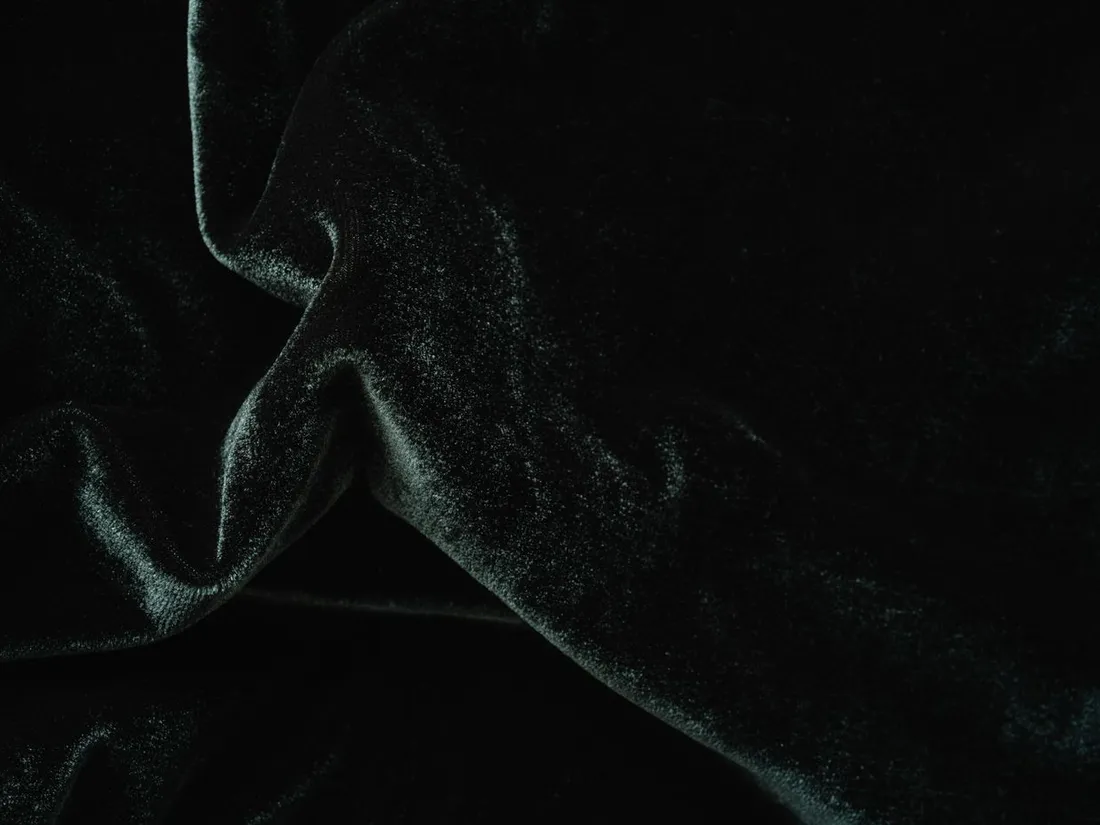
What makes a fabric velvet
Velvet is a structure, not a fibre, in the same way that satin is a weave rather than a material. The surface is a dense layer of short, upright yarn ends called the pile. Traditional velvet is usually woven as two cloths face to face, joined by extra yarns, and then sliced apart so that each cloth keeps its own cut pile.
That tells you nothing about what the yarn is. So when someone quotes you a rate for velvet, the next question is always: which fibre in the pile, which fibre in the base, and is it woven or knitted?
The types you will be offered
- Silk velvet: light, very fluid and deep in colour. Most of what is sold under this name today has a silk base with a viscose pile, so ask rather than assume. It marks easily and is usually dry cleaned.
- Viscose velvet: a pile of viscose, also called rayon, with a soft hand, a heavy drape and a rich shine. It crushes and water spots more readily than polyester.
- Micro velvet: usually polyester, with a very short, tight pile and a matte softness. It is easy to handle and hard wearing, which makes it a common choice for winter suits, lehengas and jackets.
- Stretch velvet: knitted polyester or nylon with spandex, so it gives in at least one direction and often two. It suits fitted dresses, bodices and dancewear.
- Embossed velvet: a pattern is pressed into the pile with heat and engraved rollers, so the design shows as flattened areas against the upright pile. It holds best on heat-setting fibres such as polyester.
- Burnout velvet: also called devore. A chemical paste is printed on the cloth and dissolves the pile where it lands, leaving a sheer pattern. It needs two different fibres to work, often a viscose pile on a silk or polyester base. The sheer parts are delicate and usually need a lining or a slip underneath.
Pile direction: the one rule you cannot skip
Run your palm along the cloth. In one direction it feels smooth and in the other it feels slightly rough. The smooth way is with the pile, and the rough way is against it.
With the pile running up the body, velvet looks darker and deeper, because you are looking into the yarn ends. With the pile running down, it looks lighter and shows more sheen. Neither is wrong, and many makers prefer the deeper look for eveningwear. What matters is that every panel runs the same way, including sleeves, facings and any pieces cut on a different day.
This has a cost. Pattern pieces cannot be turned end to end to save cloth, so velvet usually takes more length than the same garment in a plain fabric. Work out your metres on a one-way layout, and chalk an arrow on the back of each piece as soon as it is cut.
Cutting, pressing and storing it
- Cut in a single layer: two pile faces against each other creep, so folded cloth tends to shift under the shears. Mark on the back, and use sharp blades.
- Hold seams with care: pins and needle holes can show, so keep pins inside the seam allowance. Many tailors hand baste first and use a walking foot, because the layers slide against each other as they feed through.
- Never iron the face: heat and pressure flatten the pile for good. Steam from the back with the iron held clear, or press over a needle board or a spare piece of velvet laid pile to pile.
- Roll, do not fold: store on a tube with the pile facing out, and keep other rolls off it. A fold under weight can leave a crease that does not fully recover.
- Hang finished garments on padded hangers in a breathable cover with room around them. Keep everything dry, since water can mark viscose and silk pile.
Velvet for winter weddings and eveningwear
Velvet earns its place in cold weather because the pile traps air and takes dye deeply, so wine, bottle green, navy and black look especially rich. For bridal and festive wear, it is often used for blouses, borders, panels, jackets and shawls rather than an entire wide skirt, since a full flare in velvet gets heavy. Our piece on lehenga fabrics for the wedding season looks at how to balance it with lighter layers.
Gowns and draped eveningwear usually want the fluid silk and viscose kinds, while fitted styles lean on stretch velvet. Bandhgalas, sherwanis and dinner jackets need a firmer cloth with enough body to hold a shoulder line. If the piece is to be embroidered, check that the base can carry the work, and warn the embroiderer that a hoop can crush the pile.
What to check before you buy
- Fibre in pile and base: get both written down. A label that only says velvet is not enough.
- Pile density: fold the cloth and look along the crease. If the base shows clearly through the pile, the velvet will wear thin sooner.
- Shade in both directions: ask for photos or a swatch with the pile running up and then down, in daylight.
- Bald patches and crush marks: these often appear along old fold lines, so ask to see the roll opened out.
- Stretch: confirm how much the cloth gives and in which directions, if the design relies on it.
- Weight and width: ask for the GSM and the usable width, as light silk blends and heavy polyester velvets are far apart. Our fabric quality checklist covers the rest.
If you need a particular shade, fibre or weight for the season, post a fabric requirement with the quantity in small or bulk lots. Sellers holding that quality can reply, and nobody's name or number is shown until both sides agree. If you have velvet to move, you can list it for sale with the fibre and pile details stated plainly.
Questions
Which velvet is good for a winter lehenga?
Micro velvet is a common practical choice, as it is soft, durable and easier to handle. Many designs use velvet for the blouse, border and panels, with a lighter base carrying the flare, because a wide skirt in full velvet becomes heavy.
Which way should the pile run on velvet?
Either way can work, but every panel must run the same way. With the pile running up the body, the colour usually looks deeper and darker. With the pile running down, it looks lighter with more sheen.
What is the difference between micro velvet and stretch velvet?
Micro velvet usually has a very short, tight polyester pile and a soft matte look. Stretch velvet is knitted with spandex so that it gives with the body, and it is mostly used for fitted garments. Some micro velvets have a little stretch too, so ask what a particular lot does.
Can velvet be washed at home?
It depends on the fibre. Polyester micro velvet and stretch velvet can often be washed gently by hand, while silk and viscose velvets are usually dry cleaned, since water can mark the pile. Follow the care advice for the specific cloth and test a small piece first.